Flash Deals Live 🔥 Upgrade to Xeno Digital Lock — FREE Letter box Lock Included | Limited Time Only – Secure Your Home & Save Today!

Why Your Clothes Still Smell After Drying (And How to Fix It)

Have you ever washed your clothes, waited for them to dry, only to discover they still have a damp or musty smell?
This is a common problem for many households in Malaysia. Even when clothes look completely dry, they may still trap moisture, bacteria, or unpleasant odours. The good news is that this problem is usually preventable once you understand what’s causing it.
In this guide, we’ll explain why clothes continue to smell after drying, how Malaysia’s humid climate contributes to the problem, and the practical steps you can take to keep your laundry smelling fresh.
Quick Answer
If your clothes smell after drying, the most common reasons include:
- Clothes stayed damp for too long.
- Bacteria or mould grew inside the fabric.
- Humid weather slowed the drying process.
- The washing machine needs cleaning.
- Laundry was overloaded during washing.
- Clothes were left sitting in the washer after the cycle ended.
Removing the source of moisture and drying clothes more efficiently is usually the best long-term solution.
Why Do Clothes Smell Even After Drying?
Many people assume that once clothes are dry, bacteria are gone. Unfortunately, that’s not always true.
Odours develop when moisture remains trapped inside fabric long enough for bacteria and mildew to multiply. While the surface may feel dry, thicker fabrics such as towels, jeans, bedsheets, and sportswear often retain moisture deep inside.
Malaysia’s warm and humid environment makes this even more challenging because evaporation happens more slowly than in drier climates.
1. Clothes Took Too Long to Dry
This is the most common cause.
When wet laundry stays damp for several hours, bacteria begin feeding on sweat, body oils, and detergent residue left inside the fabric. As bacteria multiply, they produce the familiar musty smell.
This often happens during:
- Rainy weather
- Cloudy days
- Indoor drying with poor airflow
- Drying clothes too close together
The longer moisture stays in the fabric, the more noticeable the odour becomes.
2. Humidity Slows Down Drying
Malaysia experiences high humidity throughout the year.
Even if you hang clothes outside, the surrounding air may already contain a large amount of moisture. Because the air cannot absorb moisture as efficiently, clothes require much longer to dry completely.
This is especially noticeable during the monsoon season, when laundry may remain slightly damp for an entire day.
3. Your Washing Machine May Be the Real Problem
Sometimes the smell doesn’t come from your clothes—it comes from your washing machine.
Over time, detergent residue, fabric softener, lint, and moisture accumulate inside the drum, rubber gasket, and detergent drawer.
This creates an ideal environment for bacteria and mould.
Signs include:
- Washing machine smells musty
- Freshly washed clothes already smell unpleasant
- Black mould around the rubber door seal
- Slimy detergent drawer
Cleaning your washing machine regularly can significantly improve laundry freshness.
4. Leaving Wet Clothes in the Washer Too Long
Many people finish a wash cycle but don’t remove their laundry immediately.
Even two or three hours inside a closed washing machine can create enough warmth and moisture for bacteria to begin growing.
If this happens regularly, your clothes may develop a stale smell before they even reach the drying rack.
Whenever possible, hang clothes immediately after washing.
5. Overloading the Washing Machine
Packing too many clothes into one wash prevents water and detergent from circulating properly.
As a result:
- Dirt isn’t fully removed.
- Sweat remains in the fibres.
- Detergent doesn’t rinse away completely.
These residues become food for bacteria during drying.
Washing smaller loads usually produces cleaner and fresher-smelling laundry.
6. Thick Fabrics Need Longer Drying Time
Some materials naturally hold more moisture.
Examples include:
- Towels
- Blankets
- Hoodies
- Denim
- Bed linens
- Sportswear
Even when the outer layer feels dry, the inner fibres may still contain moisture.
This hidden moisture often causes the “wet towel” smell many homeowners experience.
How to Prevent Clothes from Smelling After Drying
Fortunately, preventing unpleasant odours is easier than removing them.
Here are several effective habits:
Wash Your Washing Machine Monthly
Run an empty hot wash using a suitable washing machine cleaner to remove detergent residue and bacteria.
Avoid Overloading
Leave enough space inside the drum so clothes can move freely during washing.
Remove Laundry Immediately
Hang clothes as soon as the wash cycle finishes.
Improve Airflow
Whether drying indoors or outdoors, allow enough space between garments so air can circulate.
Dry Clothes Completely
Avoid folding or storing clothes that are even slightly damp.
A Smarter Drying Solution for Malaysian Homes
For many households, especially those living in apartments or homes without good outdoor drying space, drying clothes efficiently can be difficult throughout the year.
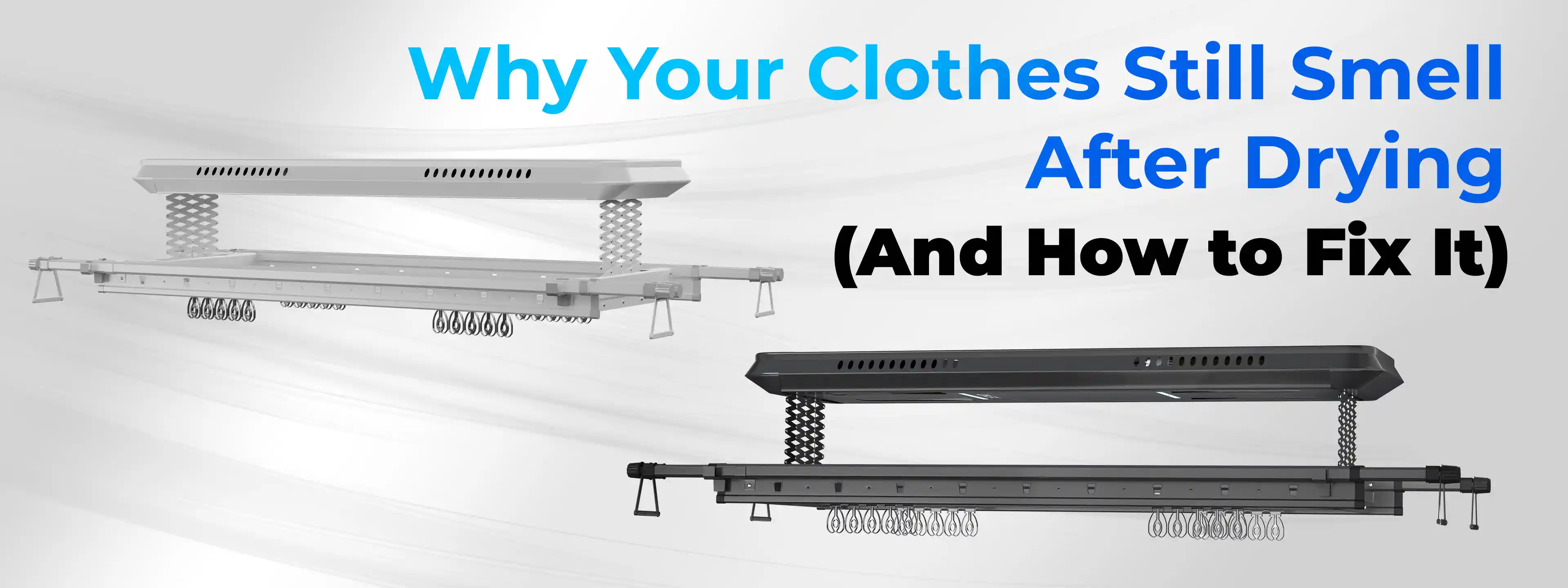
An electronic laundry hanger offers features designed to improve the drying process, including:
- Built-in fan-assisted airflow
- Gentle heating (available on selected models)
- Better spacing for hanging clothes
- Consistent drying regardless of weather
- Ceiling-mounted design that saves valuable floor space
By helping clothes dry more evenly and quickly, these systems reduce the amount of time moisture remains trapped in fabric, lowering the chance of musty odours developing.
For families who regularly deal with rainy weather or limited drying space, this can make laundry care more convenient and reliable.
Why Xeno Electronic Laundry Hangers Are a Practical Choice
Xeno Living’s electronic laundry hangers are designed with Malaysian homes in mind.
Depending on the model, they include features such as:
- Warm air drying
- Fan-assisted ventilation
- UV sterilisation
- Remote and app control
- Strong lifting capacity for everyday laundry
- Space-saving ceiling-mounted installation
These features support faster, more consistent drying, making it easier to keep clothes fresh even during humid or rainy periods.
Here more information of Benefits of an electronic laundry hanger for Malaysian homes
Frequently Asked Questions
1. Why do my clothes smell damp even though they are dry?
The outer fabric may feel dry while moisture remains trapped inside thicker fibres, allowing bacteria to produce unpleasant odours.
2. Does humidity affect laundry?
Yes. High humidity slows evaporation, meaning clothes take longer to dry and are more likely to develop musty smells.
3. Can a dirty washing machine make clothes smell?
Yes. Mould, detergent residue, and bacteria inside the machine can transfer unpleasant odours onto freshly washed clothes.
4. Will rewashing remove the smell?
Usually, yes. However, if the underlying cause—such as slow drying or a dirty washing machine—isn’t addressed, the smell is likely to return.
Know more about the why clothes take longer to dry in Johor Bahru
5. Are electronic laundry hangers worth it in Malaysia?
For households dealing with frequent rain, limited drying space, or high humidity, an electronic laundry hanger can help clothes dry more consistently and reduce the risk of lingering damp odours.
Final Thoughts
If your clothes still smell after drying, the issue is often not your detergent but the combination of trapped moisture, bacteria, and Malaysia’s humid climate. Small changes—such as cleaning your washing machine, avoiding overloaded loads, and improving airflow during drying—can make a noticeable difference.
For homes where weather or limited space makes drying difficult, an electronic laundry hanger provides a more controlled drying environment, helping clothes dry faster and stay fresher throughout the year.