Flash Deals Live 🔥 Upgrade to Xeno Digital Lock — FREE Letter box Lock Included | Limited Time Only – Secure Your Home & Save Today!

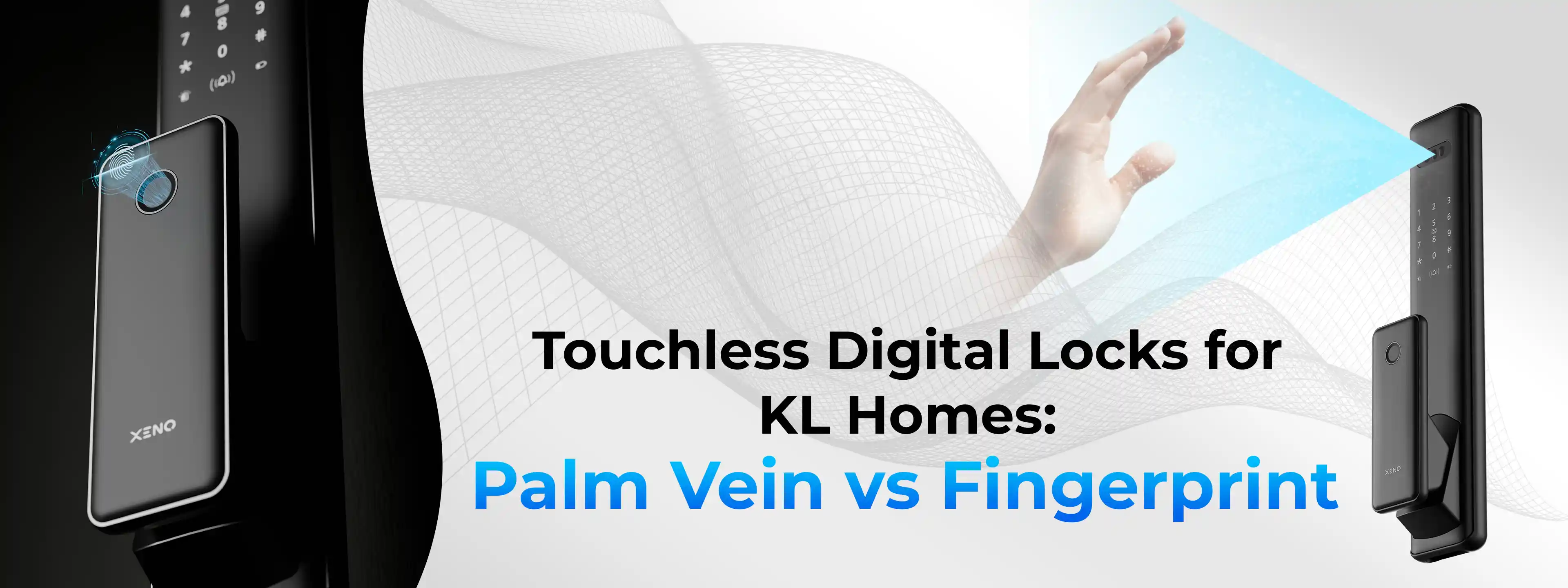
Touchless Digital Locks for KL Homes: Palm Vein vs Fingerprint

Touchless access is no longer a futuristic idea—it’s quickly becoming a practical lifestyle upgrade for homeowners in Kuala Lumpur. With growing awareness around hygiene, convenience, and smart living, many KL homeowners are now comparing two popular biometric options:
- Palm vein digital locks
- Fingerprint digital locks
Both offer keyless access, but they work very differently—and the right choice depends on your home type, family needs, and expectations, especially in KL’s humid, high-rise living environment.
This guide gives you a clear, honest comparison of palm vein vs fingerprint digital locks for KL homes, covering how they work, real-world performance, condo considerations, and which one truly makes sense for your lifestyle.
Why Touchless Digital Locks Are Gaining Popularity in KL
KL homeowners are choosing touchless locks because of:
- Busy urban routines
- Hygiene concerns in shared corridors
- Elderly-friendly access
- Frequent daily entry and exit
- Smart home adoption in condos
In high-rise living, convenience and cleanliness matter just as much as security.
What Is a Fingerprint Digital Lock?
A fingerprint digital lock scans the unique ridges and patterns on your fingertip to verify identity.
How It Works
- Finger touches the sensor
- Sensor scans fingerprint pattern
- Lock verifies stored data
- Door unlocks in seconds
Fingerprint locks are currently the most common digital locks in KL homes.
What Is a Palm Vein Digital Lock?
A palm vein digital lock scans the vein pattern inside your palm using near-infrared light.
How It Works
- You hover your palm near the sensor
- Infrared light maps vein structure
- Pattern is matched internally
- Door unlocks without physical contact
Because veins are internal, palm vein recognition is considered one of the most secure biometric methods available.
Palm Vein vs Fingerprint: Core Differences
| Feature | Palm Vein | Fingerprint |
| Touchless | Yes | No (touch required) |
| Hygiene | Very high | Moderate |
| Works with wet hands | Yes | Sometimes |
| Accuracy | Extremely high | High |
| Speed | Very fast | Fast |
| Sensor wear | Very low | Moderate |
| Cost | Higher | Lower |
| Popularity in KL | Growing | Very common |
Performance in KL’s Humid Climate
Fingerprint Locks in Malaysia
Malaysia’s humidity can affect fingerprint sensors due to:
- Sweat
- Wet fingers after rain
- Oily skin
High-quality fingerprint locks still work well—but recognition may slow slightly in some conditions.
Palm Vein Locks in Malaysia
Palm vein locks perform exceptionally well in KL because:
- No skin contact is required
- Moisture does not interfere
- Sensor wear is minimal
For homes facing frequent rain exposure or high humidity, palm vein technology has a clear advantage.
Hygiene & Touchless Access (A Big Deal in Condos)
In KL condominiums:
- Shared corridors
- Lift buttons
- Common facilities
Touchless palm vein locks:
- Reduce contact points
- Are more hygienic
- Feel more comfortable for families with children or elderly members
Fingerprint locks are safe—but palm vein locks remove touch entirely.
Security Level: Which Is Safer?
Both systems are secure—but palm vein has a technical edge.
Fingerprint Security
- Very secure for residential use
- Can theoretically be affected by surface replication (rare)
Palm Vein Security
- Uses internal vein patterns
- Extremely difficult to spoof
- Works with liveness detection
For high-security-conscious homeowners, palm vein offers next-level protection.
Condo & Fire-Rated Door Considerations (Very Important)
Most KL condos use fire-rated main doors.
Regardless of biometric type:
- The lock must be fire-rated compatible
- Installation must preserve door integrity
- Condo MC/JMB rules must be followed
Touchless technology is allowed—the door compliance matters more than the sensor type.
Brands that design for Malaysian condos—such as Xeno—offer both fingerprint and palm vein digital locks that are fire-rated compatible and condo-friendly.
Ease of Use for Families & Elderly
Fingerprint Locks
- Very easy for most users
- Familiar technology
- Works well for daily routines
Palm Vein Locks
- Even easier—just hover your palm
- Ideal for elderly users
- No need to position finger precisely
For multi-generational households, palm vein access often feels more natural.
Speed & Daily Convenience
In real life:
- Both unlock within seconds
- Difference is minimal
However:
- Palm vein avoids misreads due to wet or dirty fingers
- Fingerprint locks may require a second try occasionally
Over months of use, this small difference becomes noticeable for busy households.
Battery Life & Reliability
Both systems:
- Run on batteries
- Provide low-battery alerts
- Offer emergency power access
- Include mechanical key backup
Palm vein sensors may consume slightly more power, but modern systems are well-optimised for daily use.
Cost Comparison: Is Palm Vein Worth the Extra Price?
Fingerprint locks:
- More affordable
- Excellent value for most homes
Palm vein locks:
- Higher upfront cost
- Premium experience
- Better hygiene and accuracy
Practical Answer for KL Homes
- Fingerprint → Best for most homeowners
- Palm vein → Worth it if you value touchless hygiene, elderly ease, and premium convenience
Which Should You Choose for Your KL Home?
Choose Fingerprint If:
- You want reliable, proven technology
- Budget matters
- You live in a standard condo or landed home
- You’re happy with light contact
Choose Palm Vein If:
- You want fully touchless access
- Hygiene is a priority
- Elderly parents live with you
- You want premium smart-home experience
Real-Life KL Home Scenarios
- Young family in condo → Palm vein (hygiene + ease)
- Working couple → Fingerprint (fast & cost-effective)
- Elderly household → Palm vein (no precise positioning)
- Rental unit → Fingerprint (value-focused)
Why Local Smart Lock Design Matters
Not all biometric locks are designed for Malaysia.
Local-focused brands understand:
- Humidity challenges
- Fire-rated doors
- Condo regulations
- Daily usage patterns
This is why KL homeowners often choose brands like Xeno, which designs biometric digital locks specifically for Malaysian homes and lifestyles.
Frequently Asked Questions (FAQ)
1. Are palm vein locks allowed in KL condos?
Yes, if the lock is fire-rated compatible and installed properly.
2. Do palm vein locks work in low light?
Yes. They use infrared technology.
3. Are fingerprint locks reliable in Malaysia’s humidity?
Yes, quality models work well with proper maintenance.
4. Which is better for elderly users?
Palm vein locks are generally easier and more intuitive.
5. Are palm vein locks more secure?
Yes. Vein patterns are internal and extremely hard to spoof.
6. Do both locks need batteries?
Yes. Both include battery alerts and backup access.
7. Is palm vein technology worth the cost?
Worth it if hygiene, ease, and premium experience matter to you.